
When I got the call from my sister, my knees hit the ground, and I started screaming. “No, no, no.” My husband tried to console me, but he couldn’t bring back my little brother. After I pieced together what happened, I shut the door behind me and slid my back down the wall, rocking myself on the cold tile in a hotel bathroom in Texas.
My husband and I had flown to Austin for a wedding. The night before, we danced and lit sparklers, celebrating. I didn’t know that my younger brother had taken his last breath. I was supposed to be on a vacation—not gasping for air, hyperventilating, as I realized I’d never hear my brother’s laugh again. I’d never see the person who I still saw as the little boy I tucked in at night after reading bedtime stories to when we were kids.
My life isn’t supposed to be like this anymore, I couldn’t help but think. Before, my painful childhood felt like it was in the rear-view mirror. But no matter what I’d done to escape a life full of suffering, it found me.
Fast forward a few years to now and my second novel is about to be published. I have a wonderful family, and I live in a beautiful home by the beach. Still, I know life can change in an instant.
Abuse and neglect plagued my childhood. At times, my parents owned an escort service or dealt drugs. Thanks to my dad’s gambling problem, our family was sometimes homeless, living in a shelter or a motel room.
After my dad went to prison, my siblings and I went into foster care. I was 12. Sometimes separated from my brother and sister, I moved from town to town, from foster home to foster home. Cancer killed our mom when I was 13. With the exception of our maternal grandmother who was unable to care for us kids but was a supporting, loving adult, for the most part family didn’t step in to help.
During this time, one constant that I had was my brother, David. He and I were close in a way that only those who grow up in the kind of circumstances we did can be. We protected each other.
When our social worker threatened David—saying if he wouldn’t accept a placement she chose, she’d send him to a foster home in the middle of nowhere away from me—I responded with the policy information and the number of her supervisor’s boss to threaten her back. When David was 13, he woke to my screams in the middle of the night and, not knowing I was having a nightmare, he feared for my safety. My brother grabbed a knife and crashed into my room to save me. No matter who else abandoned us, David and I said we’d always have each other.
After aging out of foster care, I went to college. I graduated with a bachelor’s degree in journalism and moved out-of-state for my first real job as a newspaper reporter. I felt guilty for leaving my brother, even though I called and visited as often as I could. But through writing, I hoped to make a better life for myself, one where I felt I mattered.
I worked hard at the newspaper but also late into the night, trying to teach myself how to write fiction. I made friends with emotionally healthy people who treated me well. I got married to a loving man who made me feel special. I remained close with some family members, like my brother, and cut from my life others who I felt only hurt me. Now that I wasn’t around people who put me down or made light of treating me badly, my self-esteem bloomed. Things would only get better, I thought.
A few years later, I was back at home in Washington, D.C., after my brother’s memorial. Life had gone on for my husband. He was a law school student at Georgetown and had classes to attend. I, on the other hand, mostly stayed in bed for three months. I had been freelance writing for magazines, but I stopped accepting assignments.
Before my brother died, all I could think about was how much I wanted to be an author. I wanted to write books that inspired people. I wanted this more than I had ever wanted anything, aside from a family to love me.
After, all I wanted was my brother back. And since I couldn’t have that, I wished for a day that I didn’t fantasize about throwing myself in front of a speeding metro train.
I hated the world for what it did to David. I had two close friends who visited me often, listened to me cry, watched movies with me, and prayed for me. They, along with my husband, encouraged me to go to a grief support group. Eventually, I listened. At meetings, I talked about my anger and my regrets, the deep sorrow that made me fear being alone with my thoughts at night. I listened to the stories of others who understood how I felt. My anger began to fade.
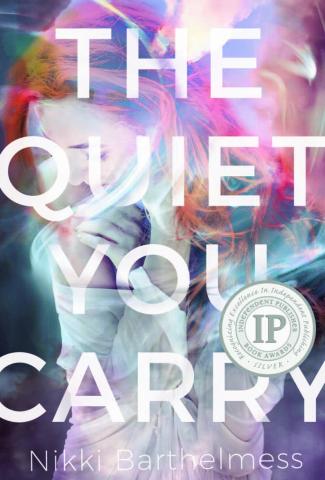
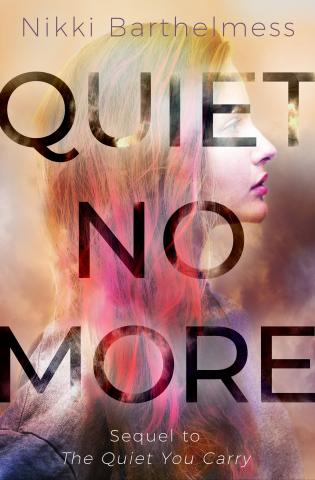
A year after David died, a publisher bought my novel about a foster kid. The next year, they published it. Since March of 2019, I’ve been lucky enough to hear from readers that my book, The Quiet You Carry, has given them hope and made them feel less alone. The sequel will be released soon. In it, the main character thinks life will improve as she embarks on her college journey. Her abuser is in jail and she has supportive friends in her corner. But things are still hard for her as she faces new challenges.
These stories are about someone who has to unlearn the ways she’s thought of herself based on being abused. They are about someone finding a new family, through building safe and healthy friendships, and using her newfound strength to fight back, while still struggling with what happened to her. My books are about a resilient person who won’t give up. They are about hope.
I’ve given speeches about my life and how I’m now living my dream as an author. I’ve been interviewed on TV and by the newspaper that I used to work for. People actually want my autograph.
With Quiet No More publishing this month and another, totally different story set to publish next year, I’m pretty busy. Because I have a baby now, too. Her name is Hadley and she is the light of my life (she also has a big “brother” named Corgus, a diva of a Pembroke Welsh Corgi who I wouldn’t dare forget to mention). My family and my career bring me happiness. I know my brother would be proud of me.
I want people to know that the choices we make can drastically improve our lives. But there’s something else I want to share, something I might not have expected to be part of my message before.
Life is always going to be hard.
Sure, it’s more difficult for some than others, and I suspect those of us who grew up in foster care will tend to have uphill battles to climb. Being an author and having the husband and baby to love and to be loved by doesn’t change that. Nothing can truly protect any of us from tragedy.
Sometimes we lose a job, and other times we lose a friend. People hurt us or let us down. People still die. None of us could have expected we’d be living through a pandemic, yet here we are. And the fact that we are living means we are lucky to still have our health. Because even though suffering won’t cease, at least not in this life, there continues to be joy.
Babies are being born. Friends can be there (if only virtually for now) to hold us when we cry, even if family isn’t. And sometimes we get to live our dreams. What I’ve learned is that despite the setbacks life is bound to throw at us, we can still find joy in what we have, while we have it. We can hope when things go wrong, they can get better. And we can go on to fight another day.
 Owner/Editor - Chris Chmielewski